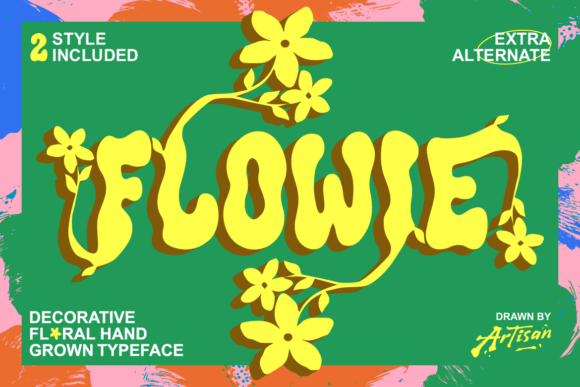
Flowie: A Playful Decorative Font for Web Design
Flowie is a decorative font that brings a fresh, floral-inspired aesthetic to digital projects. Its soft curves and hand-drawn lettering style make it ideal for creative web design applications where visual appeal and brand personality are key. As a web designer, I’ve found Flowie to be a versatile typeface that adds charm without compromising readability when used appropriately.
Visual Characteristics and Digital Appeal
Flowie’s design is rooted in organic shapes and floral accents, giving it a whimsical yet professional feel. The gentle strokes and subtle flourishes evoke the idea of blooming flowers, making it a perfect fit for brands with a nature-inspired or artistic identity. It has a light, airy presence that works well on both light and dark backgrounds, provided contrast is maintained.
The font's character set includes a range of stylized letters, which can be used as decorative elements in headers, logos, or promotional banners. However, due to its ornate nature, it should be reserved for short phrases rather than long blocks of text to maintain clarity.
Applying Flowie in Web Design Projects
When designing landing pages or hero sections, Flowie can serve as an eye-catching headline font. Its playful tone can align with branding for boutique online stores, creative portfolios, or coaching websites. For example, using Flowie in a hero title like “Welcome to Your Creative Space” instantly adds warmth and personality to the page.
In call-to-action areas, Flowie can enhance engagement by drawing attention to buttons or links. Pairing it with a clean sans serif font for body copy ensures a balanced hierarchy and improves scannability. This approach is especially effective for product landing pages or course sales pages where quick readability is essential.
For online shop banners or blog headers, Flowie can add a unique touch that differentiates your brand from competitors. It’s also a great choice for social media graphics or digital ads, where visual impact is crucial for capturing attention in a crowded space.
Readability and Responsive Design Considerations
While Flowie excels in decorative use cases, its legibility on mobile screens requires careful consideration. Ensure that the font size is large enough to remain readable on smaller devices, and avoid using it in dense text blocks. When designing responsive layouts, test Flowie across various screen sizes to confirm that it maintains its visual appeal and remains legible.
For small buttons or interactive elements, consider using a simpler font for better tap targets. Flowie works best as a display font for headings, logos, or decorative accents, ensuring it doesn’t interfere with the overall usability of the interface.
Font Pairing and Brand Consistency
Pairing Flowie with a complementary font can help achieve a cohesive design. A modern sans serif font such as Montserrat or Open Sans works well for body text, offering a clean contrast to Flowie’s ornate style. This combination is particularly effective for editorial designs, packaging concepts, or digital brand kits where both creativity and professionalism are needed.
If your brand leans more towards a traditional or editorial look, pairing Flowie with a serif font like Merriweather or Garamond can create a harmonious balance. Experiment with different pairings to find what best reflects your brand’s tone and message.
Licensing and Practical Usage
Before integrating Flowie into client projects, online stores, or digital templates, ensure you have the appropriate commercial license. Many decorative fonts require specific permissions for use in web design, especially when deployed across multiple platforms or in branded assets. Always check the licensing terms included with the font to avoid any legal issues.
Look for versions that include full multilingual support if your project involves international audiences. Additionally, confirm that the font offers webfont availability, as this ensures smooth performance on websites and mobile apps.
Real-World Applications and Examples
For a creative portfolio site, Flowie can be used in section headings or project titles to reflect the designer’s personal style. In a boutique online store, it can appear in banner headlines or promotional tags, reinforcing a brand identity centered around beauty and craftsmanship.
A coaching website might benefit from Flowie in its welcome message or feature section titles, creating a warm and inviting atmosphere. Similarly, a course sales page can leverage Flowie to highlight key selling points or testimonials, making them more visually engaging.
When used thoughtfully, Flowie enhances user engagement by adding a layer of personality to the design. It helps establish a consistent online identity while supporting the visual hierarchy of content, making it a valuable asset in any designer’s toolkit.